
SHENGSHI MEDICAL TRAVEL
Robert’s three weeks in Hainan: questions first, travel second
An edited first-person account shared with Shengshi Medical Travel. Robert describes what he asked, how the trip felt and how his care continued at home.
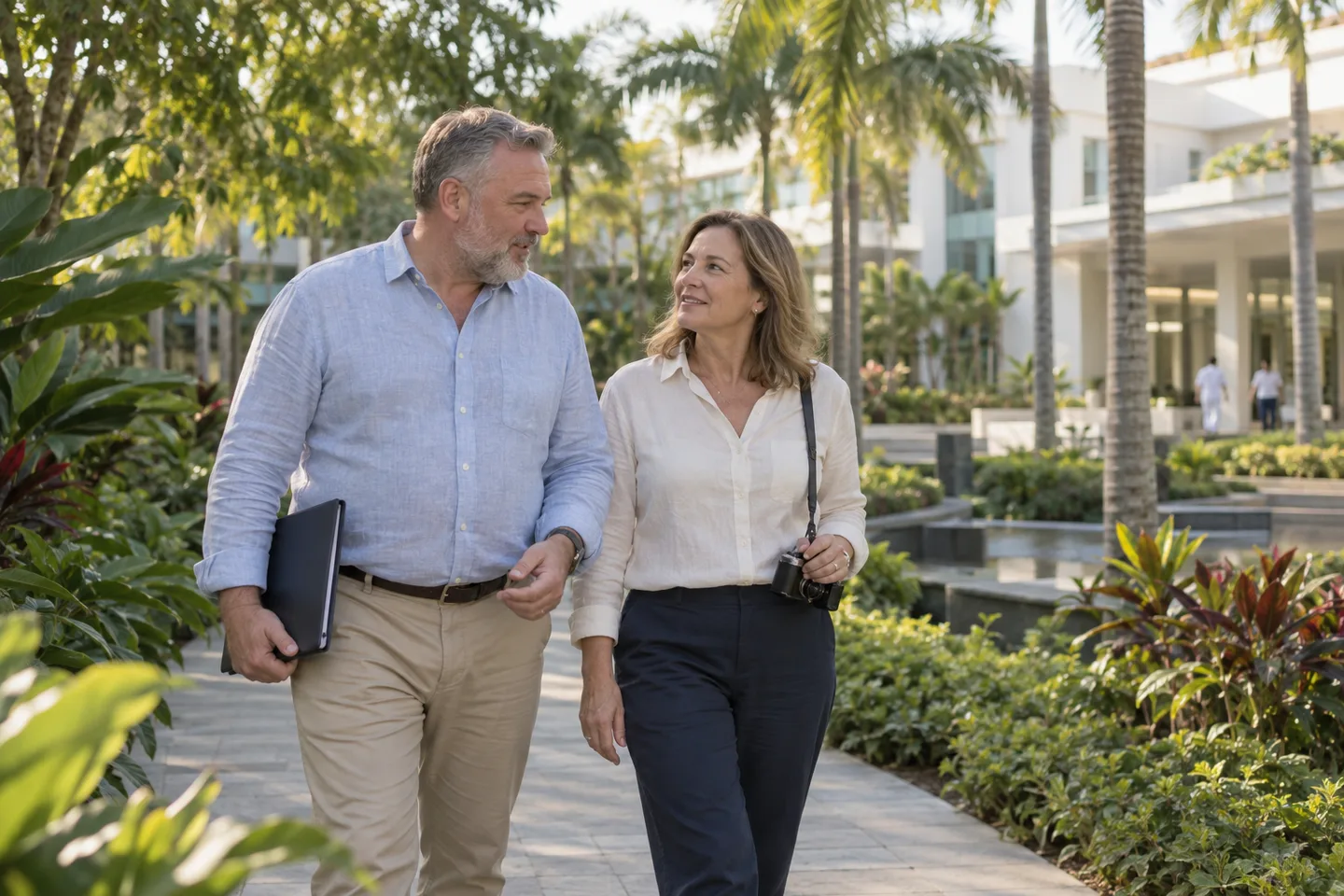
An edited first-person account shared with Shengshi Medical Travel. Robert describes what he asked, how the trip felt and how his care continued at home.
Shared by Shengshi Medical Travel; edited for clarity and privacy. This account describes one family's experience, not clinical evidence or a guarantee of treatment results.
“I wanted something more useful than a headline.”
I’m Robert, from Toronto. I was 56 when I made this trip, and I’d been living with type 2 diabetes for fifteen years. By then, four insulin injections a day were part of my routine. What wore me down was doing all that work and still feeling that my diabetes was difficult to manage. When I read about a cell-based programme in Boao Lecheng, I was sceptical. I wanted to know what it actually involved, what the risks were and whether someone with my history could even be considered.
My wife brought a notebook
Shengshi arranged a video discussion with the medical team. I had a list ready: side effects, the number of visits, the time away from home and the full budget. My wife took notes while the interpreter helped us work through the questions. Afterwards we received a written itinerary and a breakdown that separated hospital costs from travel services. I wasn’t looking for somebody to tell me everything would be fine. I needed enough information to make a decision.
Appointments, then room to breathe
We stayed in Hainan for about three weeks. In my own plan there were three infusions, scheduled a week apart, with observation afterwards. That was my schedule; it isn’t a programme I could recommend to somebody else. Between appointments, when my condition and the medical schedule allowed it, my wife and I spent time by the sea. We visited Boao, Shimei Bay and Sanya. Having help with transport, accommodation and language made those ordinary days much easier. My wife took far more photographs than either of us expected.
The important part happened back home
Back in Canada, I kept seeing my own doctor and tracking my blood glucose. Over the following months, my doctor adjusted my insulin, including stopping the bedtime injection and reducing daytime doses. I also felt less tired and noticed less tingling in my hands and feet. Those are the changes I described to Shengshi; they don’t establish what caused each change or what another person will experience. I still have diabetes, and decisions about medicines belong with my doctors.
What I would tell another family
I’d say: take your time with the questions. Ask what evidence applies to your case, what isn’t known yet and what happens after you go home. Keep your usual doctor involved. The sea and the photographs are good memories, but the useful part of this trip was having a plan I could understand—and people who helped me follow it.
Was this story helpful?
Like this articleReads are counted after time on the page, with analytics consent. Repeat visits from the same browser are limited to one per day.
YOUR NEXT STEP
Start with a conversation.
Tell us your preferred language, travel dates and the support you need. We will explain the next steps before you book.